Scriptures for anger matter when the heat rises and you’re about to say the thing you’ll regret by dinner. Anger can start with real hurt, but it quickly recruits pride, sharp words, and that old need to make someone pay.
Don’t use these verses to stuff what happened. Use them to face it before resentment settles in and starts running your home, ministry, recovery, or prayer life.
Let Christ rule the next response.
How to Use These Scriptures for Anger in Real Time
Anger comes fast. Shame often comes faster. A Christian can be deeply hurt, react badly, and then feel trapped between “I was wronged” and “I sinned too.” That inner scramble is familiar to a lot of people.
These scriptures for anger are not here to help you stuff emotion, smile through pain, or excuse a sinful outburst because “that’s just how you are.” Biblical anger management is plainer than that. Scripture deals with what anger does in the heart, in the mouth, and in relationships.
Use this list like a working tool:
- Read one passage before a hard conversation
- Memorize one short verse for the hot moment
- Pray a verse back to God when resentment starts replaying
- Journal the trigger, what the verse exposes, and what obedience looks like next
Different passages do different jobs. Some slow you down. Some expose pride. Some push you toward reconciliation. Some help you release retaliation. Some move you into forgiveness.
Don’t just admire these verses. Use them while the pulse is still up.
1. James 1:19–20
If you need one passage for the moment anger is rising, start here. James gives a plain sequence: quick to hear, slow to speak, slow to anger. Then he cuts through our excuses. Human anger does not produce the righteousness God desires.
That matters in family conflict, ministry pressure, prison ministry conversations, recovery settings, and ordinary misunderstandings that get emotional in a hurry. Most of us flip the order.
- Quick to defend
- Quick to explain
- Quick to accuse
- Slow to listen
James reverses it. Stop talking. Listen carefully. Delay reaction. Ask, “What response would please God?” not “How do I justify myself?”
Compared with Proverbs 14:29, this is more immediate. Compared with Proverbs 15:1, it’s more diagnostic. Compared with Matthew 5:21–24, it’s less specific about reconciliation and more about self-control in the first thirty seconds. That’s often where the battle is won or lost.
2. Proverbs 14:29
This proverb treats anger as a wisdom issue, not just a mood issue. Whoever is slow to anger has understanding, but a hasty temper exalts folly.
That line stings because some Christians quietly believe strong emotion proves strong conviction. It doesn’t. Sometimes it proves you haven’t ruled your spirit for five minutes.
James 1 tells you what to do in the moment. Proverbs 14:29 shows what repeated reactions are turning you into. That’s the harder question.
Try using this verse after the conflict, not just during it. Ask:
- Did my reaction show understanding or folly?
- Did resentment shape my tone, face, or words before I noticed?
- Should I wait before texting or confronting?
A quick temper doesn’t stay private for long. It starts showing on your face, then in your timing, then in your speech. By then everyone else in the room already knows.
3. Matthew 5:21–24
Jesus refuses to let anger stay small. In this passage, anger moves toward insult, contempt, and broken relationship. A person can look religious on the outside and still carry a heart full of hostility.
That is why this text hits people active in church and ministry. You can serve, sing, preach, teach, and still be simmering. Jesus won’t let worship cover contempt.
Being busy for God is not the same as being right with your brother.
Matthew 5 and Ephesians 4 both call for quick action. Matthew presses reconciliation before worship continues. Ephesians warns against giving the devil an opportunity. Both say delay is dangerous.
If your anger feels morally justified but is poisoning your relationships, this passage helps. Stop rehearsing the other person’s fault. Own your part where you’ve sinned. Take the first honest step toward peace where possible. Don’t confuse “I care about truth” with “I’m allowed to nurse contempt.”
4. Psalm 103:8–10
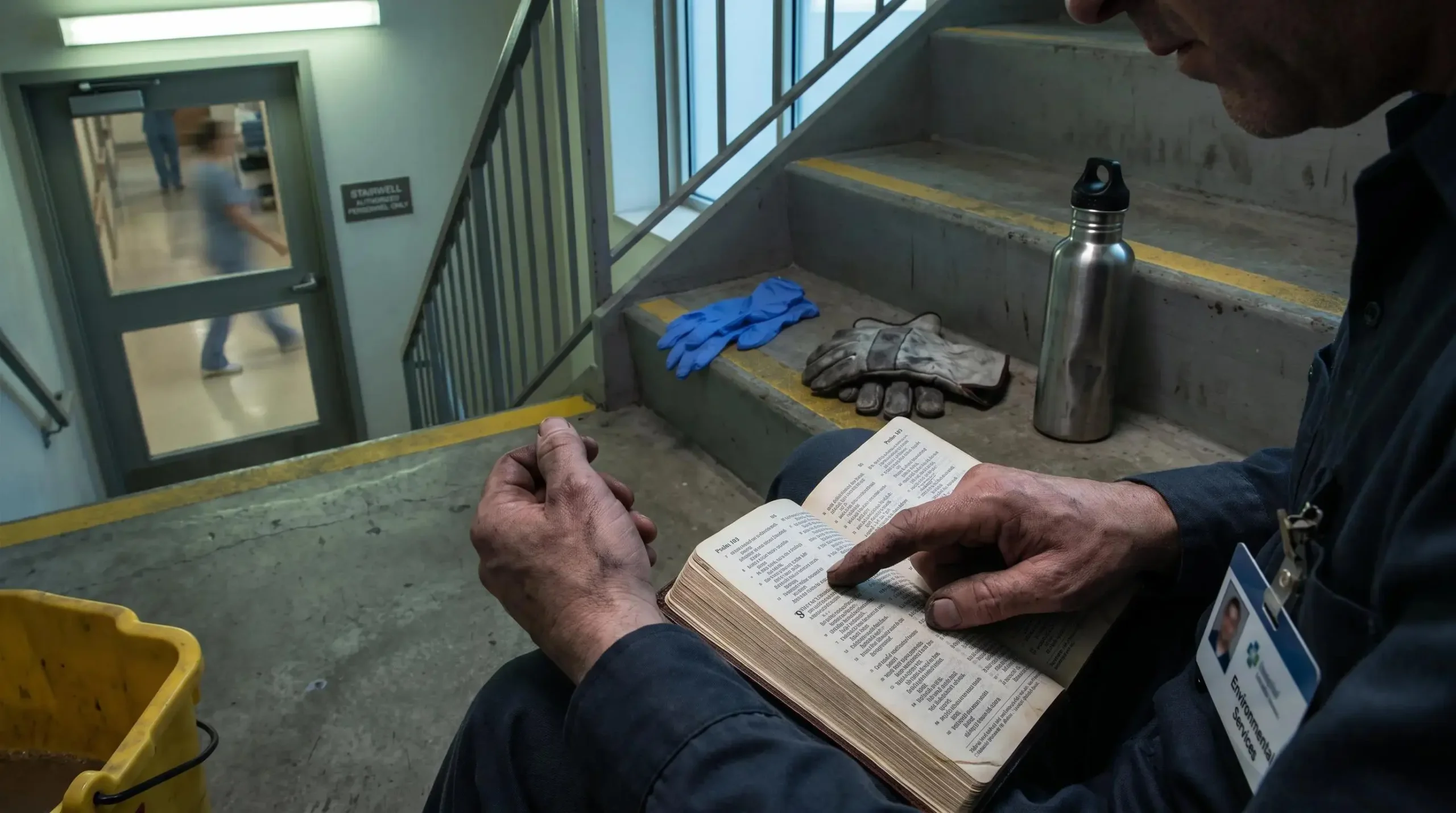
Some passages confront your anger. This one softens it. Psalm 103 turns your eyes to the Lord: compassionate, gracious, slow to anger, abounding in love, not dealing with us as our sins deserve.
We learn how to handle anger not only from commands, but from the way God has handled us. That matters more than people think. A harsh person has usually lost sight of mercy, at least in practice.
This psalm is especially useful when bitterness, self-righteousness, or plain spiritual exhaustion are feeding the fire. Sit with what God has not done to you. He has not paid you back as your sins deserved.
- Meditate on God’s patience toward you
- Let received mercy become offered mercy
- Use this passage when entitlement is driving your anger
If you’re asking how to let go of anger and resentment, start here. Mercy received has a way of loosening the grip of mercy withheld.
5. Proverbs 19:11
Here is a needed distinction. Good sense makes one slow to anger, and it is a person’s glory to overlook an offense. Not every offense needs a confrontation.
That sounds simple until you’re irritated for the fourth time by the same tone, the same delay, the same slight disrespect. Then suddenly every annoyance feels like a moral cause. That’s a mistake.
Matthew 5 deals with serious relational hostility. Proverbs 19:11 helps with the smaller daily offenses that become larger because we keep feeding them. Mark 11:25 deals with forgiving what is still lodged in the heart. Proverbs 19:11 asks whether this even needs to stay lodged there.
Ask yourself:
- Does this need correction?
- Does it need a calm conversation?
- Or does it need simple release?
A lot of anger isn’t about righteousness. It’s injured pride dressed in church clothes.
6. Ecclesiastes 7:9
This verse is blunt: don’t be quickly provoked, for anger rests in the heart of fools. The image matters. Anger doesn’t just visit. It can move in.
That’s where ongoing resentment becomes dangerous. Some people say they’re over it, but the old injury still shapes their reactions, their stories, and their assumptions. In family systems, recovery circles, and long-running church conflicts, anger can become part of a person’s identity.
Proverbs 14:29 contrasts patience and folly. Ecclesiastes goes further. It shows anger settling into the inner life. Ephesians 4 then adds urgency so it doesn’t remain overnight.
Watch for the difference between being hurt and housing hostility. Bring old resentments into prayer, confession, and when appropriate, a real conversation. If anger has become your default lens, it won’t leave because you ignore it.
7. Ephesians 4:25–27
This is one of the most useful texts on how to deal with anger as a Christian because it is honest without being permissive. Speak truth. Be angry and do not sin. Don’t let the sun go down on your anger. Don’t give the devil an opportunity.
Notice what the passage does not say. It does not say you must never feel anger. It says anger must not be allowed to turn into sin or settle into a foothold.
James 1 emphasizes listening and restraint before anger spills out. Ephesians 4 helps after anger has already appeared.
A practical framework:
- Tell the truth about what happened
- Refuse sinful speech and retaliation
- Seek resolution quickly
- Don’t nurse the grievance
Delay feels easier in the moment. It rarely helps. Unresolved anger gets spiritual traction faster than people think.
8. Proverbs 15:1
This is the verse for heated conversations. A soft answer turns away wrath, but a harsh word stirs up anger.
That isn’t mere communication advice. It is wisdom about how conflict spreads. Tone matters because anger is contagious. One sharp sentence can set a room on fire.
James 1 slows the inner reaction. Proverbs 15:1 shapes what comes out once you speak. In marriage, parenting, ministry, workplace stress, and tense social interactions, this verse is painfully practical.
- Gentleness is not weakness
- Harsh truth is still harsh
- A soft answer often takes more strength than a cutting one
A gentle answer won’t fix every conflict. Some people still want a fight. But it can stop needless escalation, and sometimes that is the difference between a hard talk and a wreck.
9. Colossians 3:5–8
Colossians treats anger as part of an old way of life that must be put away. Anger, wrath, malice, slander, obscene talk. They travel together.
That matters because many people minimize anger while ignoring what it is producing. Sarcasm. Cutting humor. Verbal filth. Habitual meanness. Slander disguised as “processing.” By then the issue isn’t a feeling. It’s a pattern.
Proverbs 15:1 focuses on one exchange. Colossians goes deeper. It deals with the whole wardrobe.
Look for anger’s companions in your life. Don’t separate internal rage from external speech. In recovery work, we see this a lot: anger rarely stays in one lane. It hooks into other destructive habits and starts steering.
10. Proverbs 29:22
This proverb is not subtle. A man of wrath stirs up strife, and one given to anger causes much transgression.
Some people still think anger mainly hurts themselves. Scripture says otherwise. It spreads conflict and multiplies sin. It damages homes, churches, ministries, and recovery groups. It creates fallout.
Ecclesiastes 7:9 describes anger settling inside. Proverbs 29:22 describes the trouble it spreads outside. Proverbs 15:1 shows how a moment can be calmed. Proverbs 29:22 shows what happens when the pattern goes unchecked for years.
Track the collateral damage honestly. Repeated anger is not neutral energy. If you’re asking how to get rid of anger and resentment, part of the answer is facing what it has already been costing.
11. Ephesians 4:31–32
This is one of the clearest before-and-after passages in the New Testament. Bitterness, wrath, anger, clamor, slander, and malice must go. Kindness, tenderheartedness, and forgiveness must take their place.
This passage answers the question of how to let go of anger and resentment better than most people expect. It doesn’t say, “Wait until you feel softer.” It says put these things away.
There is a useful measured reminder that forgiveness can be practiced, not merely admired. A 2022 meta-analysis of 20 forgiveness-education studies involving 1,472 children and adolescents in 10 countries found a moderate improvement in forgiveness (Hedges’ g = 0.54) and a smaller improvement in anger (Hedges’ g = 0.29). That does not test Bible reading itself, and its participants were young people rather than adults. Still, it fits the passage’s movement from stored anger toward practiced forgiveness: repeated, structured work can produce measurable change.
Forgiveness is not pretending the hurt was small. It is refusing to keep feeding it. The model is how God in Christ forgave us.
If you need practical help moving from truth to action, Terry Stueck’s Forgive Instantly & Live Free speaks directly to freedom from anger and resentment without playing games with the pain.
12. Psalm 37:8
This short verse is direct: refrain from anger, forsake wrath, and fret not yourself; it tends only to evil.
Some anger isn’t loud. It churns. It replays the wrong, imagines the next conversation, builds the case, sharpens the speech, and keeps the body tense. Psalm 37 addresses that inward burning.
Ecclesiastes warns against anger settling. Psalm 37 tells you to step away before fretting drifts toward evil. Psalm 103 comforts you with mercy. Psalm 37 tells you to stop feeding wrath.
When your mind won’t let the offense rest:
- Name fretting for what it is
- Interrupt the replay cycle
- Surrender the matter to God before it becomes sinful action
A quiet mind is not automatic. It usually has to be chosen on purpose.
13. Proverbs 16:32
This proverb restores dignity to self-control. Whoever is slow to anger is better than the mighty, and he who rules his spirit than he who takes a city.
That is a needed word in men’s ministry, recovery groups, and any setting where force gets confused with leadership. Real strength is not domination, intimidation, or winning the argument. It is ruling your own spirit.
Proverbs 14:29 praises slowness to anger. Proverbs 16:32 adds the image of superior strength. Proverbs 29:22 then shows the wreckage of the opposite life.
Redefine victory. If you left the room with the last word but not with self-control, you did not win.
14. Mark 11:25

Jesus connects prayer with forgiveness: when you stand praying, forgive if you have anything against anyone.
That word anyone closes a lot of loopholes. Not just family. Not just church members. Not just people who apologized well. Anyone.
Mark 11 is especially helpful for the person who wants peace with God while quietly carrying offense against people. Prayer should expose stored resentment, not help us avoid it.
Bring names before God. Bring wounds before God. Don’t use spiritual language to hide bitterness. Ephesians 4:31–32 tells you what must replace anger. Mark 11 shows one place that replacement often begins: in honest prayer.
15. Matthew 18:21–22
Peter wants a number. Jesus refuses the ledger. That is why this passage belongs near the end. Resentment survives by counting.
When offenses repeat, especially in family wounds or chronic disappointment, the heart starts recording. “This is the fifth time.” “This is who they are.” “I’ve done enough.” Jesus breaks that scorekeeping instinct.
Mark 11 deals with forgiving in the prayer moment. Matthew 18 deals with forgiving over time. Proverbs 19:11 sometimes calls for overlooking. Matthew 18 speaks to the deeper challenge when forgiveness must be renewed again and again.
Repeated forgiveness is not denial of pain. It is refusal to let the ledger become your master. Freedom often starts when the record is handed to Christ.
What These Scriptures Reveal About Anger, Resentment, and Freedom in Christ
Taken together, these scriptures for anger give a steady pattern. Anger must be slowed. It must not become sin. It exposes folly when it rules us. It damages speech and relationships. And it must be replaced by forgiveness, tenderness, and mercy.
Scripture does not deny that anger can signal pain, fear, injustice, pride, or wounded desire. But it also refuses indulgence. The biblical path is honest confession, self-rule, quick reconciliation, and mercy.
Common mistakes keep showing up:
- Calling personal offense righteous anger
- Confusing silence with forgiveness
- Venting instead of praying
- Clinging to moral superiority
- Waiting to obey until feelings soften
Jesus and the apostles were not giving theory for quiet study only. This is lived obedience for homes, streets, cells, ministries, recovery meetings, and ordinary arguments after a long day. If you want a practical next step beyond this article, Forgive Instantly & Live Free is built for readers who need help turning biblical truth into actual forgiveness and peace.
A Simple Christian Plan for Using These Scriptures When Anger Hits
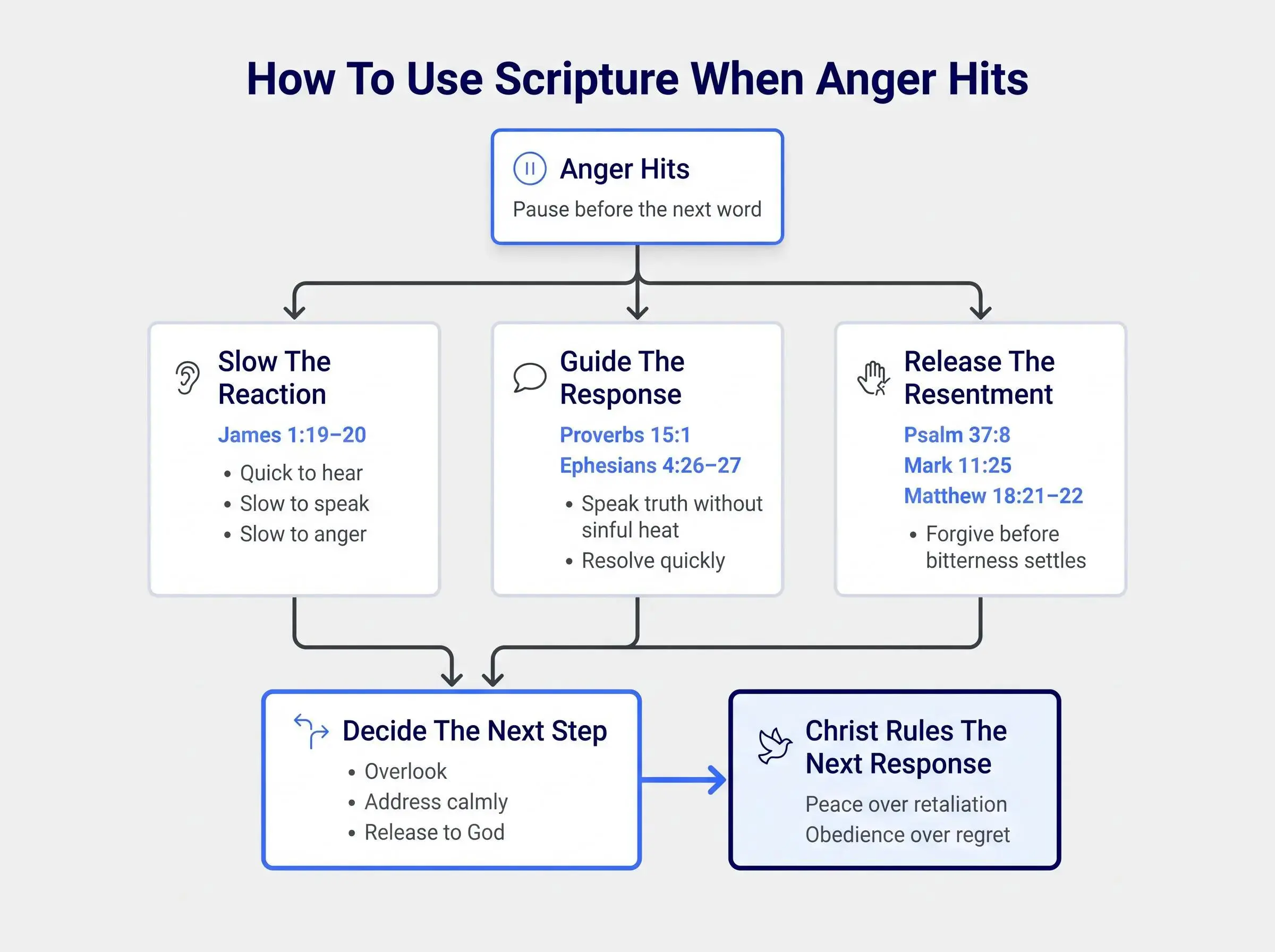
You do not need all 15 verses in your head at once. You need a usable plan.
When anger rises
- Notice
Stop and notice the surge.
- Choose a verse
Choose one verse that fits the moment.
- Get quiet
Get quiet before speaking.
- Speak truthfully
Tell the truth without sinful speech.
- Decide a response
Decide whether this offense should be overlooked, addressed, or released to God.
- Pray forgiveness
Pray forgiveness before resentment settles.
- Move toward peace
Take one concrete step toward peace if reconciliation is needed.
Match the passage to the problem:
- Talking too fast: James 1:19–20
- Escalating tone: Proverbs 15:1
- Replaying an old wound: Ecclesiastes 7:9 or Psalm 37:8
- Needing quick resolution: Ephesians 4:25–27
- Needing to forgive: Mark 11:25, Matthew 18:21–22, or Ephesians 4:31–32
If you’re in recovery or a high-conflict setting, repeated practice matters. Repentance may need accountability, support, and blunt honesty before God. The goal is not image management. It is inner freedom and faithful obedience.
Memorize a small set of anchor passages. Build your own anger-response plan for home, church, ministry, and the conversations you already know are hard.
Conclusion
These scriptures for anger do more than condemn sinful reactions. They teach you to listen before speaking, refuse lingering wrath, seek reconciliation, and forgive as you have been forgiven in Christ.
Choose the one passage that most exposes your current struggle. Pray through it today. Then put one act of obedience behind it. That is where anger stops being your identity and starts becoming a signal that drives you back to Christ.